
A Look Back…#5 Elementary Flying Training School
In September of 1939, Canada entered into the war against Germany. Allied countries quickly sprung into action creating large scale training programs. One of these programs was the British Commonwealth Air Training Plan, or BCAPT. Prospective pilots from 4 Commonwealth countries (United Kingdom, Canada, Australia, and New Zealand) would be trained at schools scattered across each country. Several levels of schools existed, Elementary Flying Training Schools (EFTS) were schools that taught basic flying techniques. Generally these schools used deHavilland Tiger Moths and Fairchild Cornells for training.
#5 Elementary Flying Training School first opened in Lethbridge. However, a demand for a bombing and gunnery school mixed with the high Lethbridge winds would see the school moved to High River. The Lethbridge location would become #8 Bombing and Gunnery School. Several new buildings were erected at the High River site including a new hangar, officer barrack blocks, an administration building, a mess hall, a station hospital, and recreation facilities. These buildings joined an already established High River airfield, one that had been in use since the 1920’s.
Prior to opening an ad in the High River Times asked readers to offer up any items that could be used at the base including pianos, sporting equipment, and magazines. Locals jumped at the chance to help serve their country. Later, some residents would open their homes to house RCAF officers and their wives.
Equipment and personnel were quickly moved to High River and students would start their training almost immediately. A public opening ceremony that included tours and flight demonstrations was held and over 2500 locals would attend. The new school also brought significant work to the struggling town, employing many local men and women as cooks, mechanics, janitors, administrators, and even as teachers for the pilots themselves.
Many of the men on the base enjoyed recreational activities outside of their barracks. Dances welcoming locals were held, and some men dated the local girls who attended.
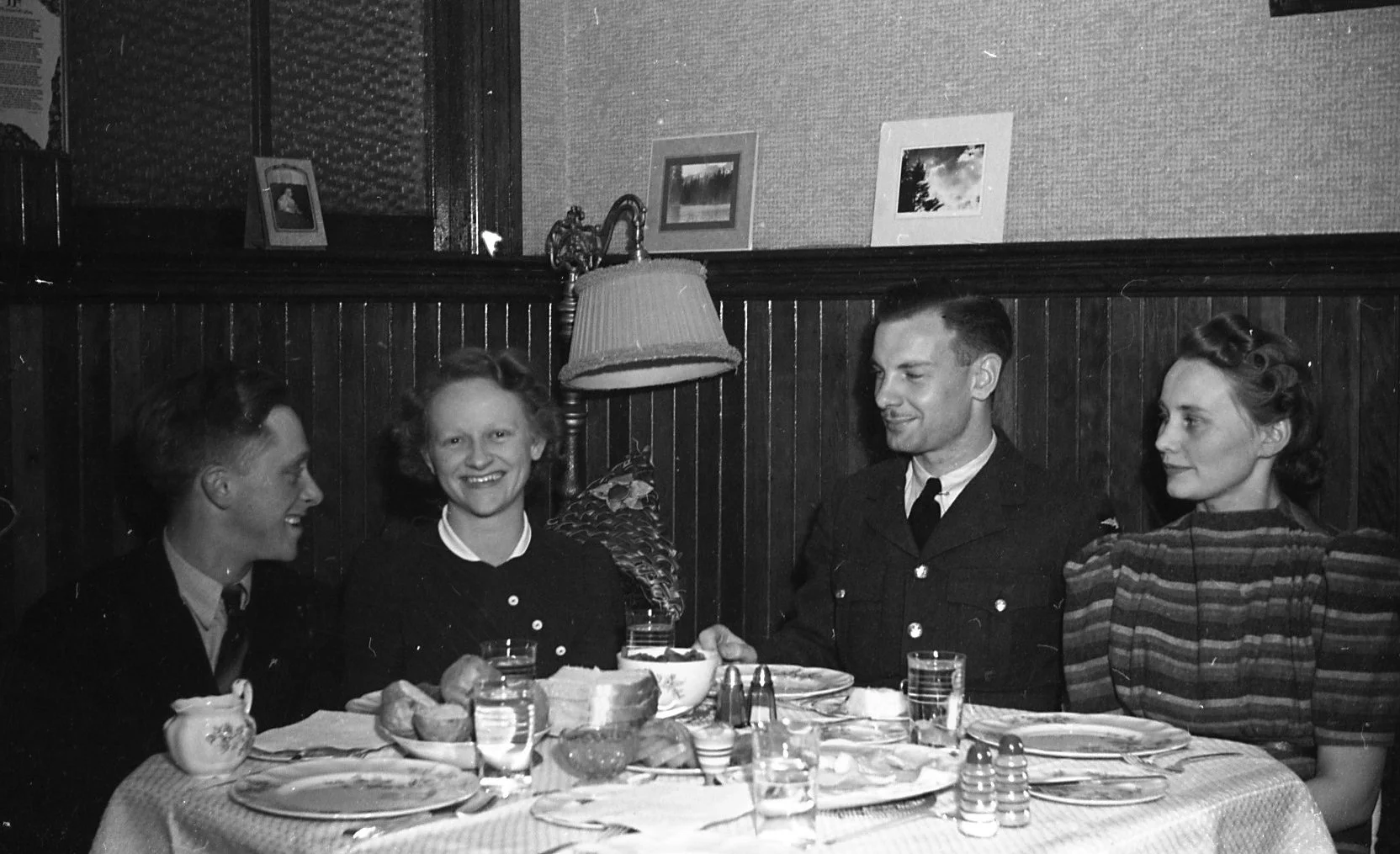
Unidentified Smith family member, Gwen (nee Smith) Christofferson, Howard McBain, and Annette Christofferson sit around the kitchen table at Annette’s Lane & Emerson block apartment, c. 1943.
Howard was a British RAF member who trained at #5 EFTS. He and Annette were engaged but eventually called off the wedding after her mother objected.
Museum of the Highwood Collection
Flight school was not without its dangers, however. Several young men would lose their lives while training at #5 EFTS. One notable incident occurred near Stavely when a Cessna from #15 SFTS at Claresholm and an aircraft from #5 EFTS collided. Both #5 trainees were killed, while the young man from #15 SFTS would survive the wreak. Many of these young men would be buried in the Highwood Cemetery.
Due to an overabundance of trained men, the school would cease operations on September 15, 1944. #5 EFTS was incredibly successful, and at the time of its closing students had logged 254,603.5 hours of flying time. In its three years the school saw the graduation of more than 4000 pilots for the war effort.
Civilian workers were relieved of their duties and moved on. The buildings were emptied out and auctions were held to sell off items that were no longer needed.
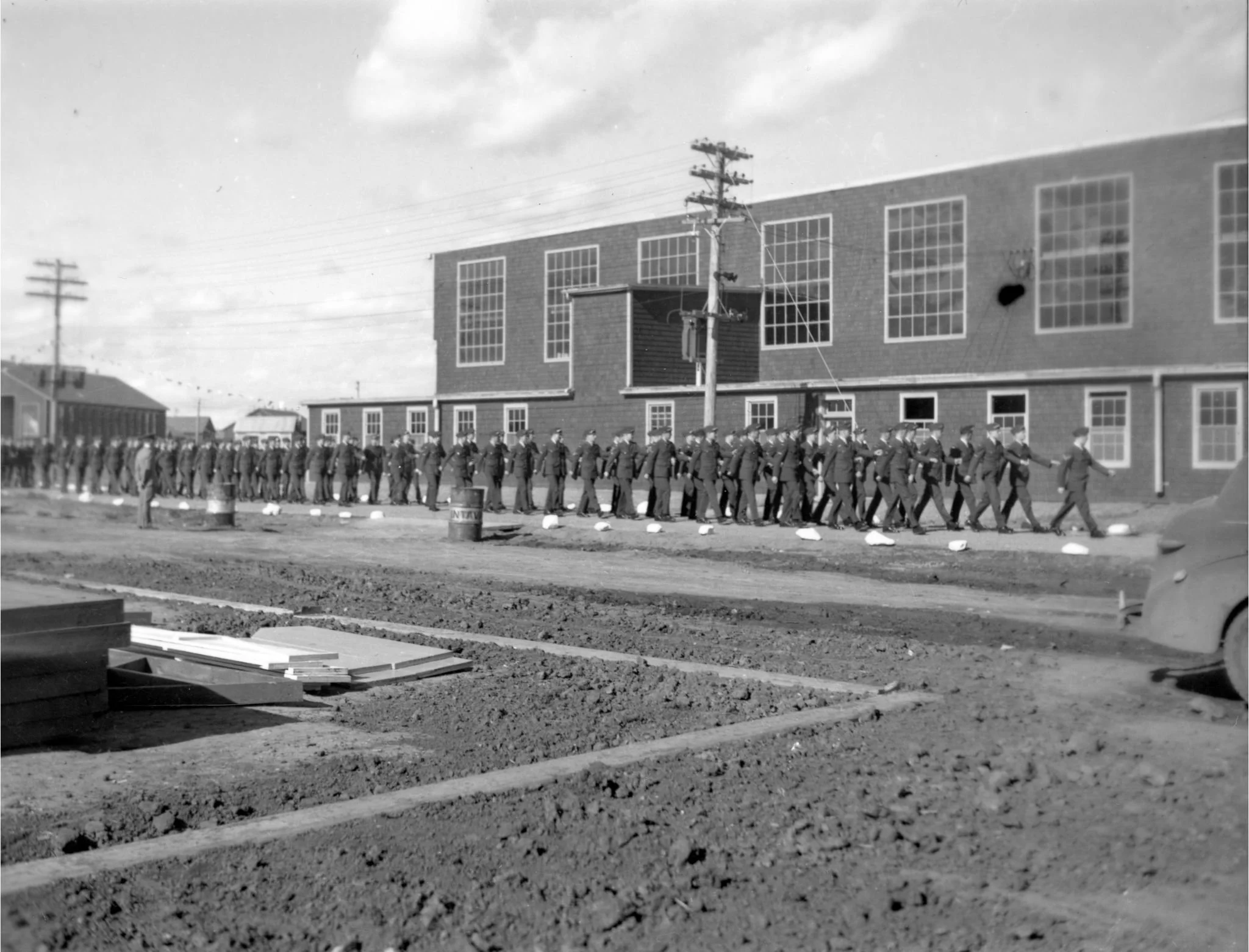
“Passing Out” parade at #5 EFTS, c. 1942.
Museum of the Highwood Collection
Several buildings would be moved off of the site. The High River Agricultural Society would acquire one of the hangars and have it moved to the original Rodeo Grounds. A second hangar was moved to the Jack Groeneveld farm, northeast of High River. The remaining hangar has been used for a variety of ventures, but is currently a privately owned business.
Other buildings were moved into town. Officers barracks were moved to 4th Avenue SE and made up part of the housing at the Twilight Nursing Home. An office building was moved to 5th Avenue SW and became a doctors office. Finally, the recreation centre at #5 was moved to the corner of 5th Avenue SW and Macleod Trail. The building would become the basis for the Highwood Memorial Centre.
Other local training schools are still standing. #15 SFTS now makes up part of the Claresholm Regional Airport. #19 SFTS near Vulcan is still standing, but is no longer used for landings.
The Museum of the Highwood has their Remembrance Day exhibit on from now until November 16th. The exhibit features several items pertaining to both #5 EFTS and local veterans.
Written by Delainey Niven
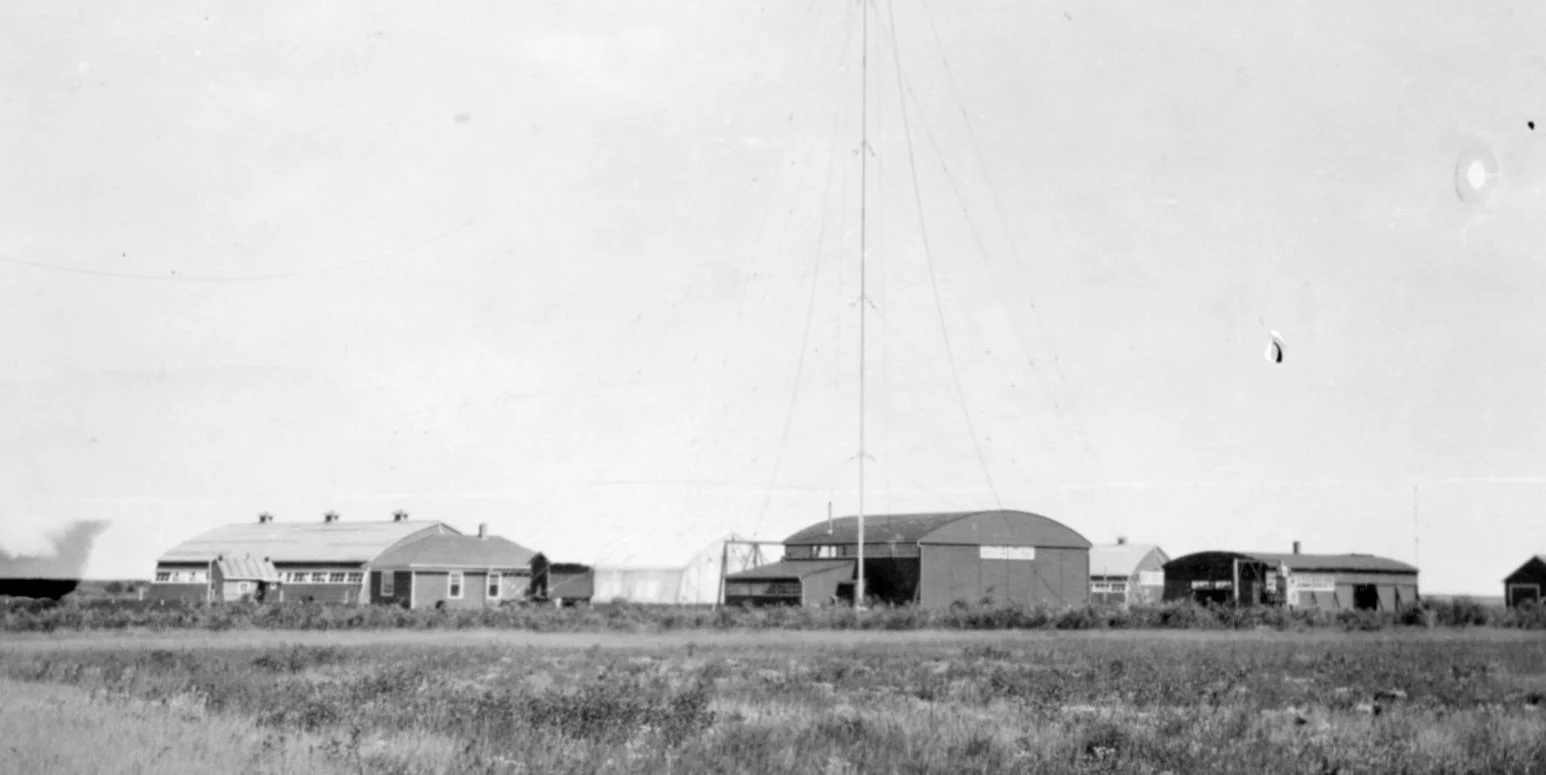
View of High River Aerodrome, c. 1921. These hangars would later be used by personnel at #5 EFTS.
Museum of the Highwood Collection
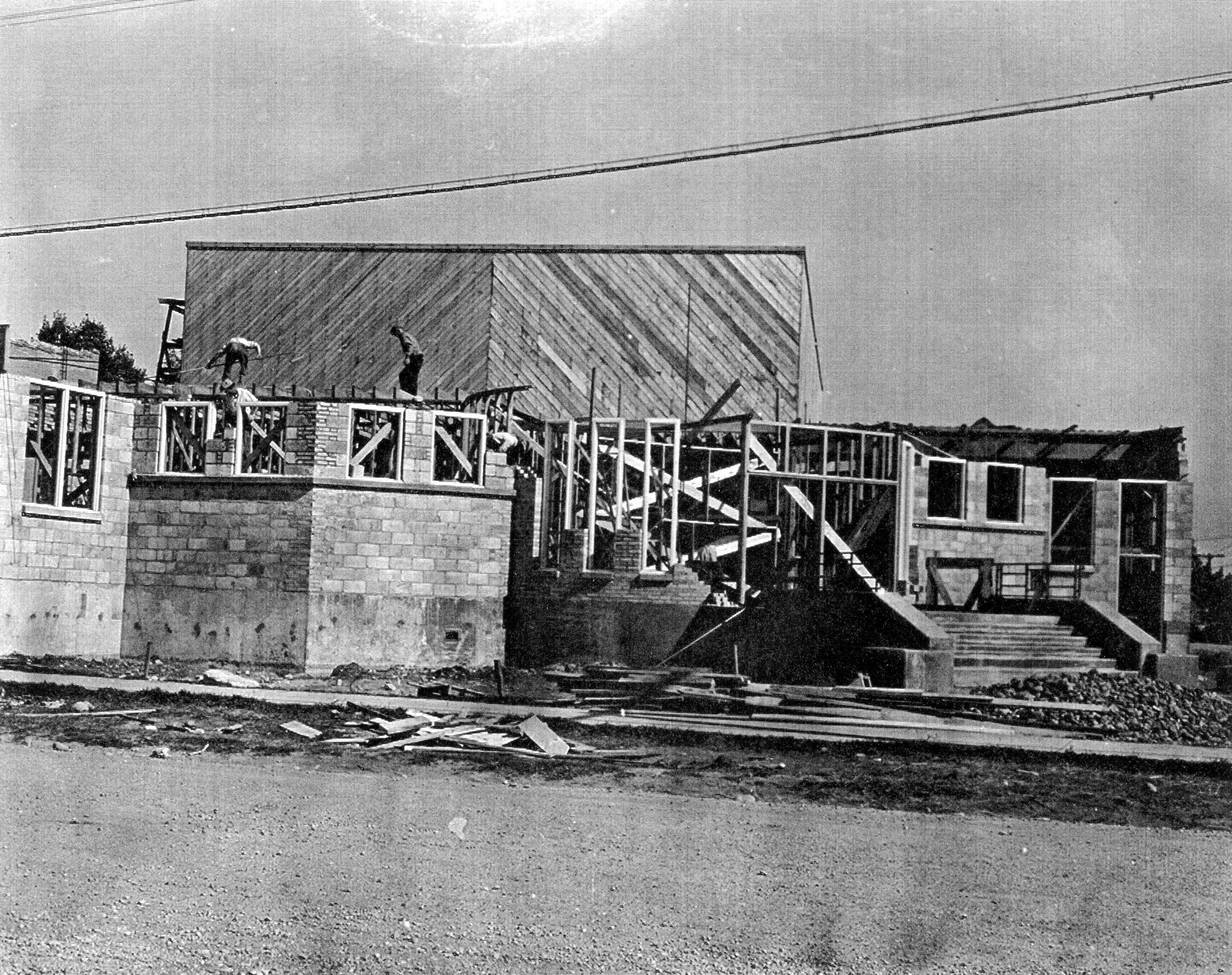
Highwood Memorial Centre entrance under construction, c. 1947. Former #5 EFTS recreation centre is the large building visible in background.
Museum of the Highwood Collection