A LOOK BACK…LIFE AFTER DEATH IN HIGH RIVER
It is inevitable, that every October, questions regarding death and the afterlife are asked at the Museum. The history of death in High River is a long one, and includes many different characters.
High River’s first mortuary was a upstairs room in a small building near where the CIBC currently sits. Opened in 1902 by a man known only as “Rheinhart,” the mortuary was only one of several businesses run out of the building. By all accounts, Rhiehart was a strange character. He often insisted on leading funeral processions and would take matters into his own hands while clients were buried.
At one burial it was discovered that grave diggers had not quite met the caskets’ size requirements. Ever the quick thinker, Rheinhart produced an axe, hopped into the grave, and hacked the sides until the grave was wide enough to fit the casket. Problem solved.
By 1918, mortuary responsibilities had been placed on Alf Kelly. Mr. Kelly would use the basement of his 1st Street S.E. home as a morgue. However, in times of need, other buildings were also used. A small garage, also owned by Kelly, would become a temporary morgue during the 1918-1919 ‘Flu Epidemic.
Alf Kelly would continue to serve clients out of his home until the business was sold in the 1940’s. Steve Jones, the new owner, continued to use the basement as a morgue. Jones would own the business until 1947. The home was then subdivided into apartments. The lot is now home to Birdsong Studios.
The first official funeral home was opened by E. Lyle Snodgrass. Originally born in New Brunswick, Lyle had moved with his parents to High River at a young age. He would marry Helen Beagle of Cayley, and together they would venture into the mortuary business. Snodgrass Funeral Homes would officially open in 1929 at 301 Macleod Trail.
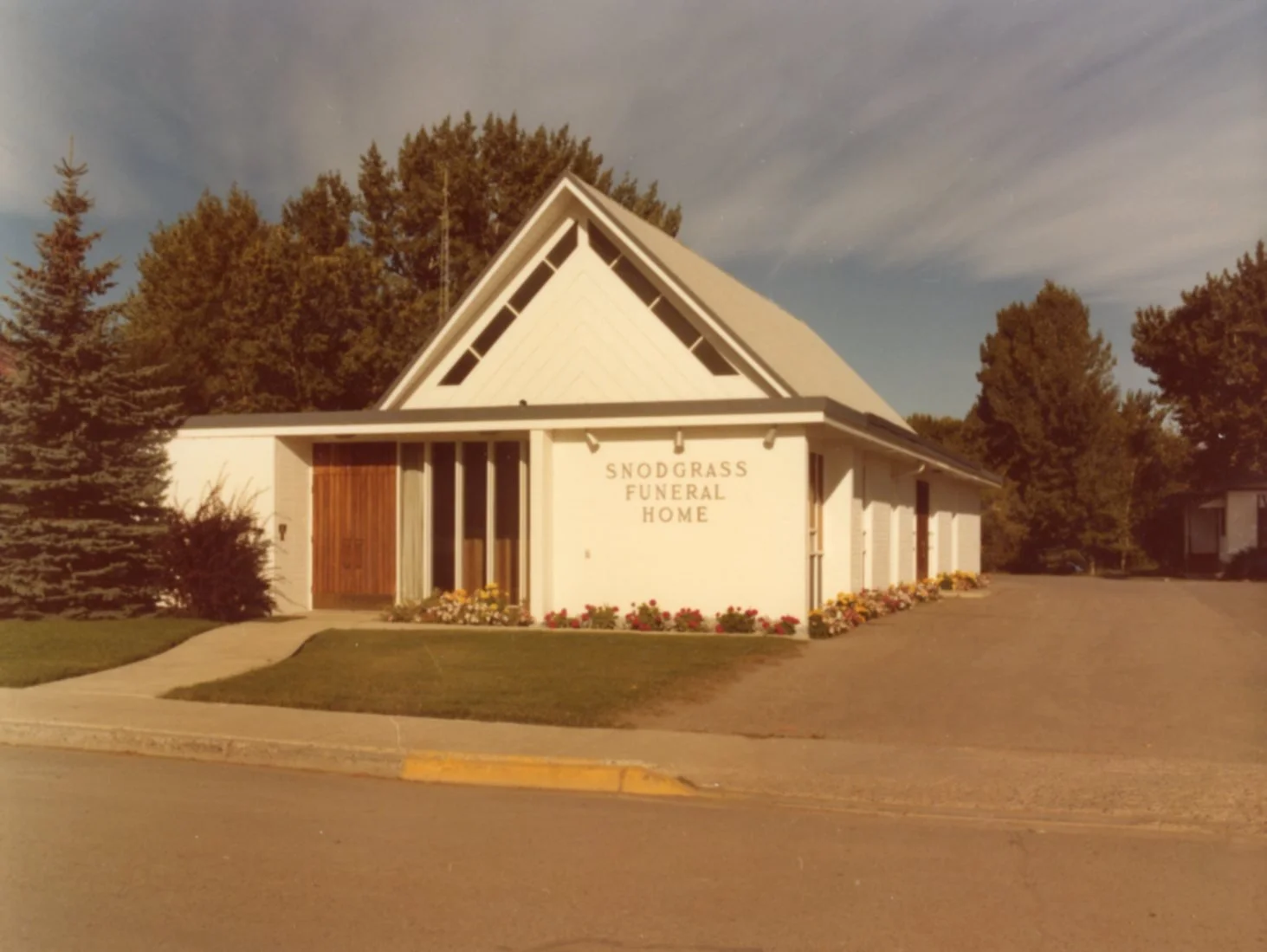
Snodgrass Funeral Homes, c. 1979. Built in 1965, this building would replace the original funeral home.
Museum of the Highwood Collection
Lyle and Helen would run the home until Lyle’s death in 1960. After his death, Helen would continue to run the business. She was later joined by her two sons: Larry and Bob. Both sons would jointly run the business until Bob’s death in 1987. Larry, joined by his wife Marge, continued operating the business after his brother’s passing.
The Snodgrass family also supplied a free, local ambulance service, something that continued until the creation of a subsidized paramedic force in 1975.
However, the journey of those departed did not end at the funeral home. The final resting place of loved ones has always been a point of concern for those they have left behind.
Burials in High River have changed over the centuries. Cemeteries existed, but were often not utilized. According to old-timers, many Chinese Canadians would have a temporary grave, used until their body could be sent back to their birthplace. Burials on private property were also commonplace. Unfortunately, this often meant that bodies often had to be exhumed and relocated when floodwaters destroyed the grave. This exact situation prompted J.W. Short to apply for cemetery permit in 1891.
The permit was given, in trust, to the High River Presbyterian Church.
A number of years later the Presbyterian Church, having decided that they did not require the full amount of land described on the permit, agreed to a sale of land to the High River Agricultural Society. The Society had been searching for a new location for their racetrack and an agreement was struck between the two. This lasted until an unnamed Ag Society member suggested that by moving some of the graves, the Ag Society could obtain a much nicer location for the new track.
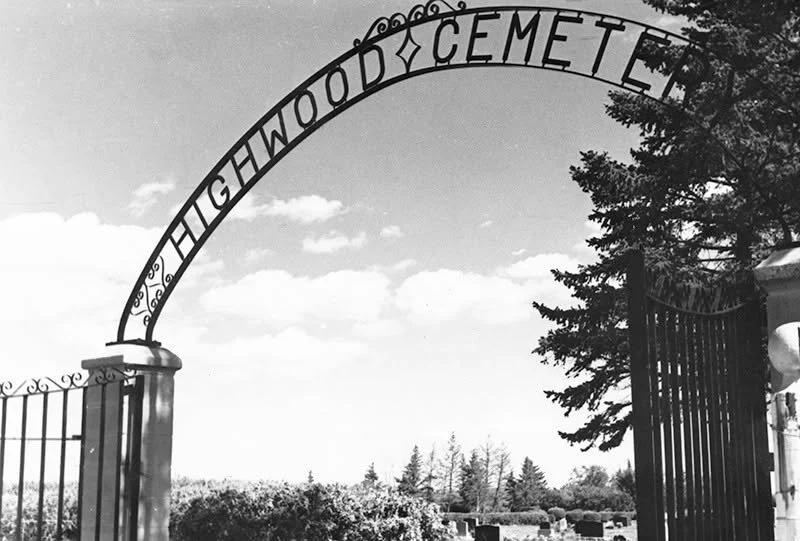
Highwood Cemetery Gates, c. 1965. These gates were built by local Dean Pritchard.
Museum of the Highwood
Predictably, this decision was not met with much enthusiasm. Many locals were understandably uncomfortable with the idea of a racetrack right next to departed friends and family.
The racetrack was eventually voted down and the Ag Society found a more suitable home.
However, this would not be the end of the Highwood Cemetery’s woes.
In 1910, an earlier error in surveying the land was discovered. The road needed to be widened, placing the road directly over several graves. After unsuccessfully attempting to reach relatives, several headstones were moved back off the intended road. Later on, that same road (what is now 5th Street S.E.) was widened again. The headstones were pushed back once more. These headstones now sit directly outside of the Cemetery fence.
This created one of High River’s most enduring tall tales: that the graves were left behind and bodies still lay under the road. Although passed down by generations of High Riverites, this rumour has never been verified.
The Highwood Cemetery continues to be a very picturesque resting place for High River many former residents.
Written by Delainey Niven
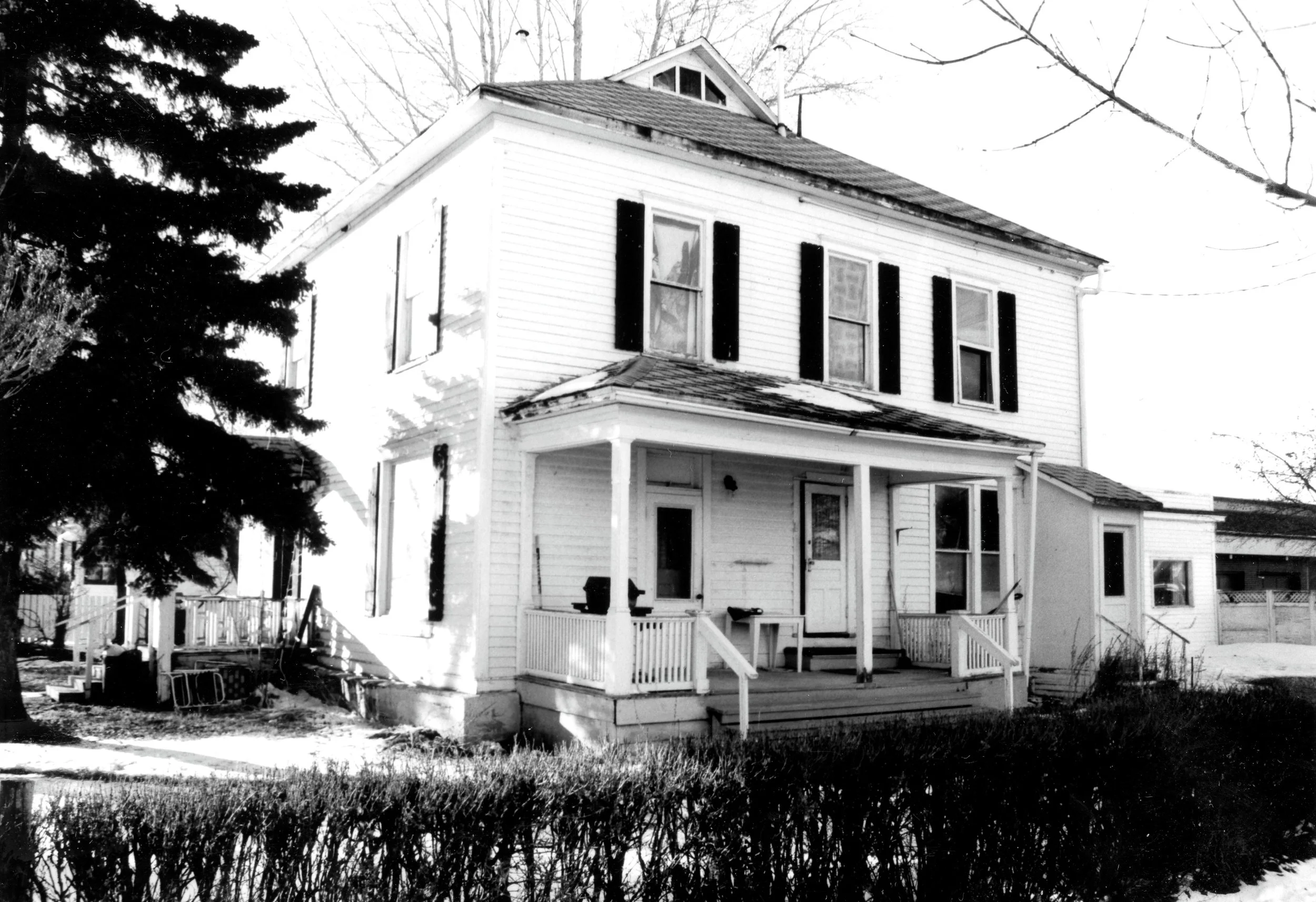
Alf Kelly home, c. 2004. This home was located on the corner of 1st Street S.E. and 4th Avenue S.E. The house was torn down after the 2013 Flood.
Photo by Walter Danylak
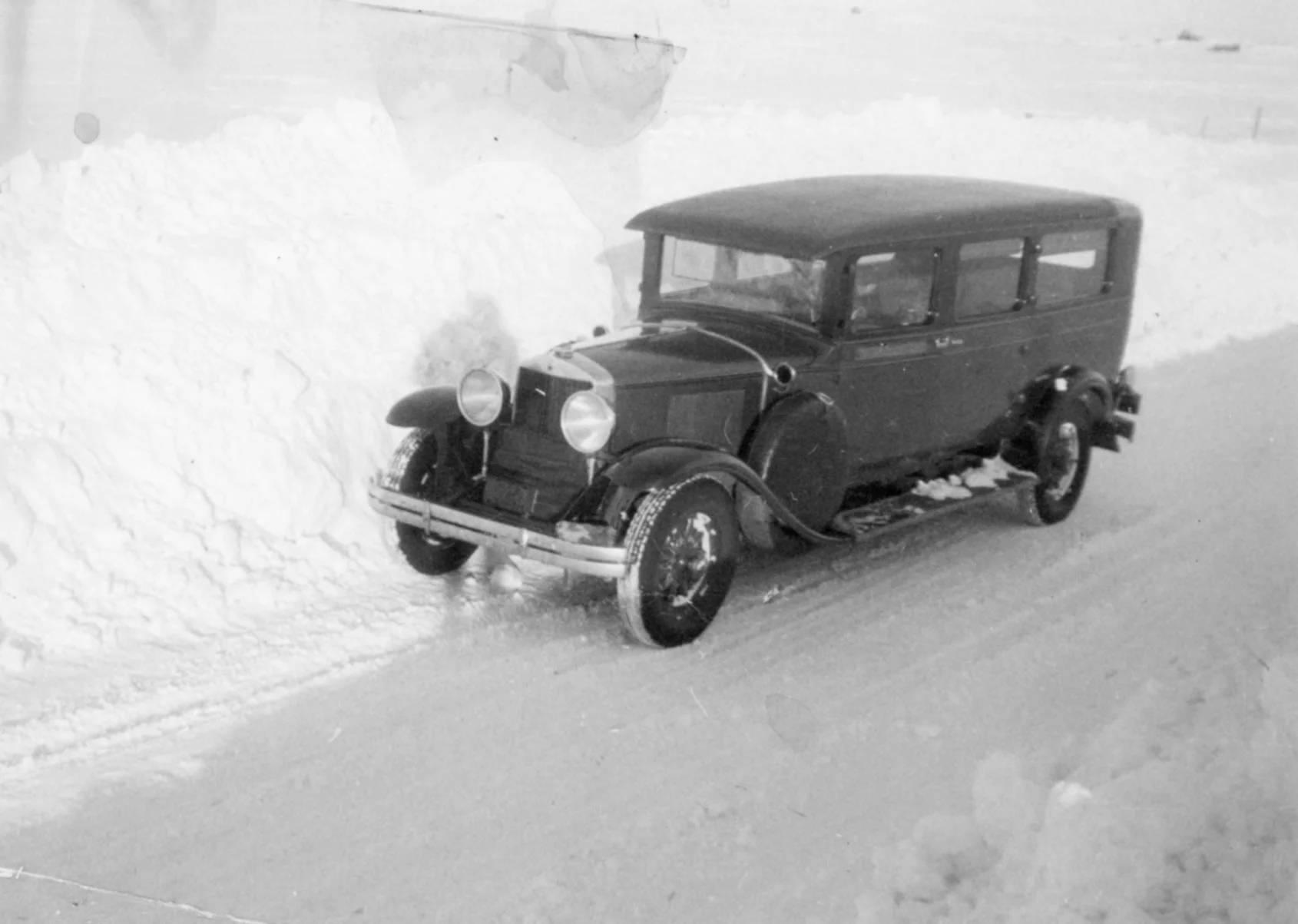
Snodgrass Funeral Homes Graham-Page Hearse in winter, c. 1935.
,Museum of the Highwood Collection