A Look Back...School Days in High River
The days are getting shorter, the leaves have begun to turn colour, and the early morning sounds of children on their way to school have started again.
Early efforts to bring formal education to High River were voted down (multiple times) by residents. Low attendance numbers also hindered early school efforts.
By 1889 local children had had enough. A petition was started and was filled with the names of many of the more popular locals and delivered to the nearest government office. It is believed that a determined young girl by the name of Julia Short may have forged some of these signatures, as many of the signatories were not in High River at the time. Nevertheless, the Government of the North West Territories would grant High River permission open a school in 1889. High River’s schoolchildren had finally found success.
The first classes were held in 1889 at Buck Smith’s home near River Road. Inspector Blair of Okotoks was the first teacher but was soon replaced by a young woman, Madge Walker. Miss Walker became a significant draw for the local men, and it was quickly decided that students must be 19 years or younger to attend school. Some of the early students included representatives from the Findlay, Short, and SexSmith families.
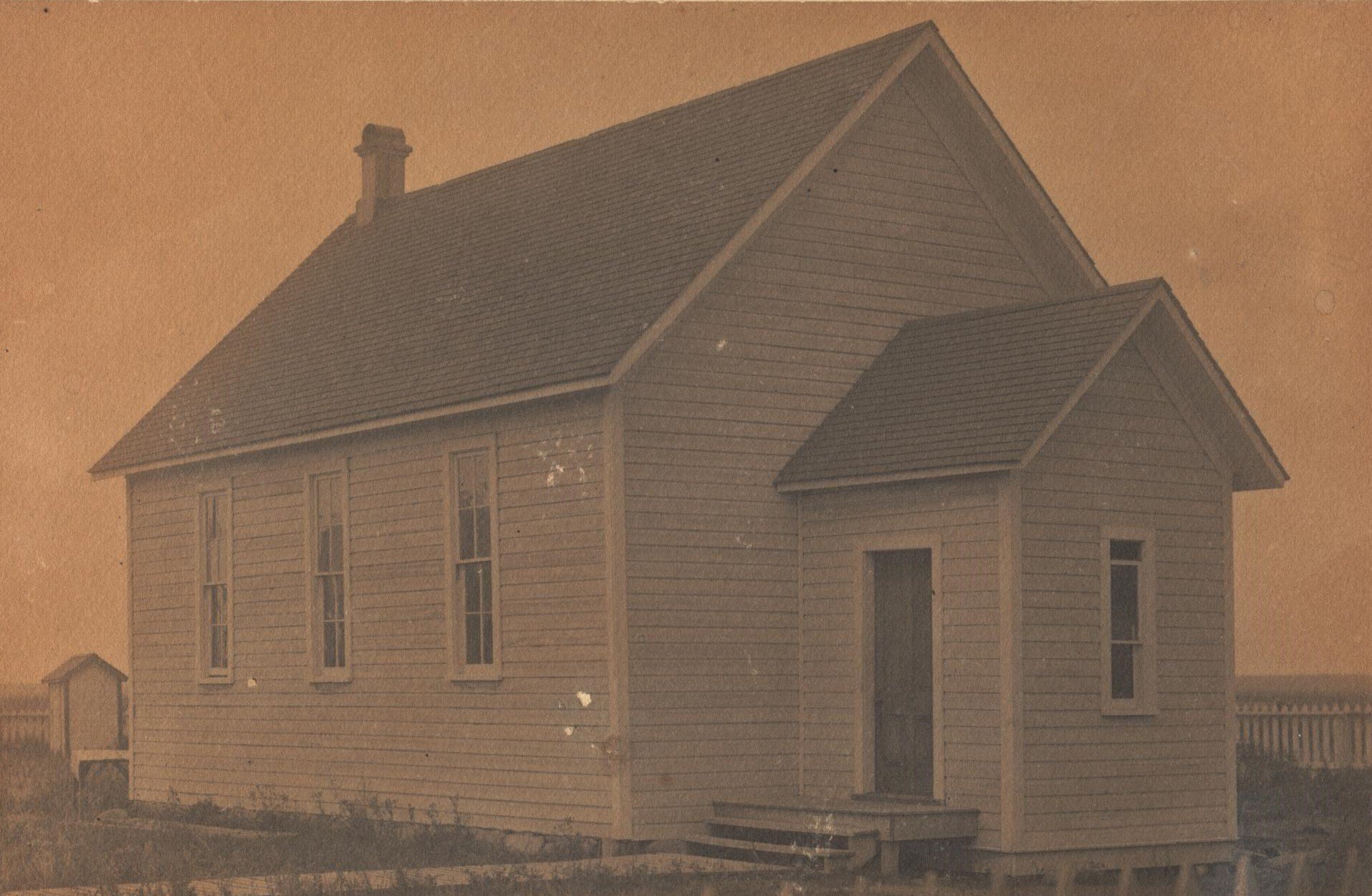
Chalmers Presbyterian Church, no date. Museum of the Highwood Collection
In 1907 this building would be converted into a temporary elementary school. This building currently serves as Arnold & Arnold Law Office.
High River’s first (official) school building was located on Macleod Trail, near where the Christian Reformed Church now stands. This school would unfortunately burn to the ground in 1897. A year later, a stone school was built. Much of the early school history depicts a disjointed system, where students were often required to attend school in various buildings and businesses around town. This would change in 1903 with the construction of Eastward School at 223 4th Avenue S.E.
Although Eastward School would solve many problems, High River would continue to grow and the school quickly filled up. In 1907 the Chalmers Presbyterian Church would be converted into an elementary school. Later bought by the School Division, it would be moved onto the current site of Spitzee School. In 1912 a brand new high school (also known as Westward School) was constructed. This building now forms the “Old Half” of Spitzee Elementary School.
For the next 50 odd years, these schools would serve their community well. Unfortunately, by the 1950’s Eastward School was in desperate need of renovations. Deemed too expensive to renovate, a new school was built instead. The new Eastward School was constructed on the former High River golf course, near the Highwood Cemetery. Originally constructed as an elementary school, it also contained two wings for high schoolers. The original Eastward School was demolished in 1955.
The 1969 school year would see the end of the East vs. West debate. In 1970 Westward School became “Spitzee Elementary” and Eastward School became “Senator Riley High School.”
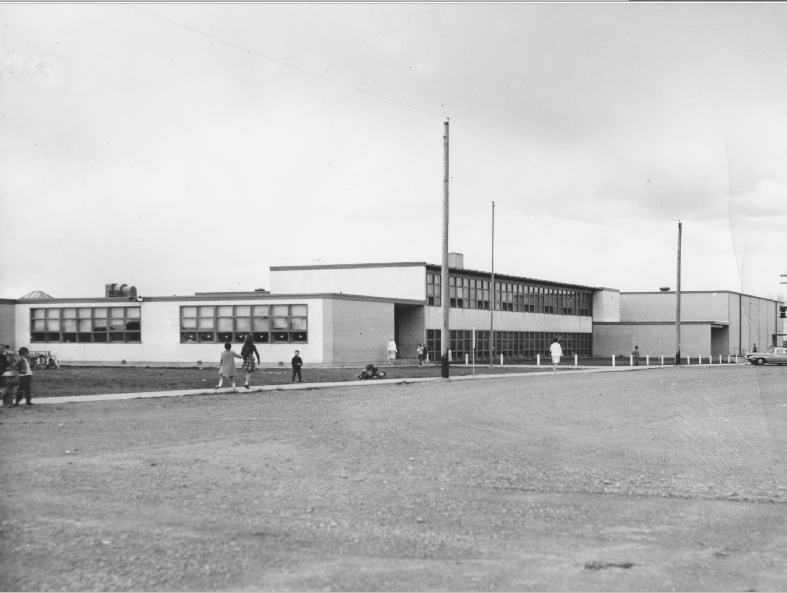
High River High School, later known as Senator Riley High School, c. 1960. Much of this school was burnt in a 1993 fire. Museum of the Highwood Collection
High River’s growing population continued to be a problem. A kindergarten building was given the go ahead in 1978 but the School Division quickly realized that a larger building was needed. In 1982, the Right Honourable Joe Clark School (or simply “Joe Clark School”) was opened on the east side of town. Named for former resident and Prime Minister of Canada, Joe Clark, the school would be a welcome addition to the town.
By the 1990’s the necessity for a new high school was obvious. SRHS was now serving high school students from not only a growing High River, but also Blackie and Cayley Schools. Plans for a new high school were soon drafted and Highwood High School would officially open in 1996. Senator Riley High School would change its name once more, becoming Senator Riley Middle School.
At the same time, a group of Catholic parents had begun fundraising for a new Catholic school in High River. For the first few years, Catholic students were housed in the Nurses Residence adjacent to the High River General Hospital. A brand new school, named Holy Spirit Academy, would open in 1998 on the north side of High River. The school would serve both elementary and high school aged students.
As class sizes grew, a new elementary school was built on the east side of town. Holy Spirit Academy would move to this new location. The original school was renamed Notre Dame Collegiate and continues to serve grades 7-12.
As High River continues to grow, education is sure to be the topic on many residents minds.
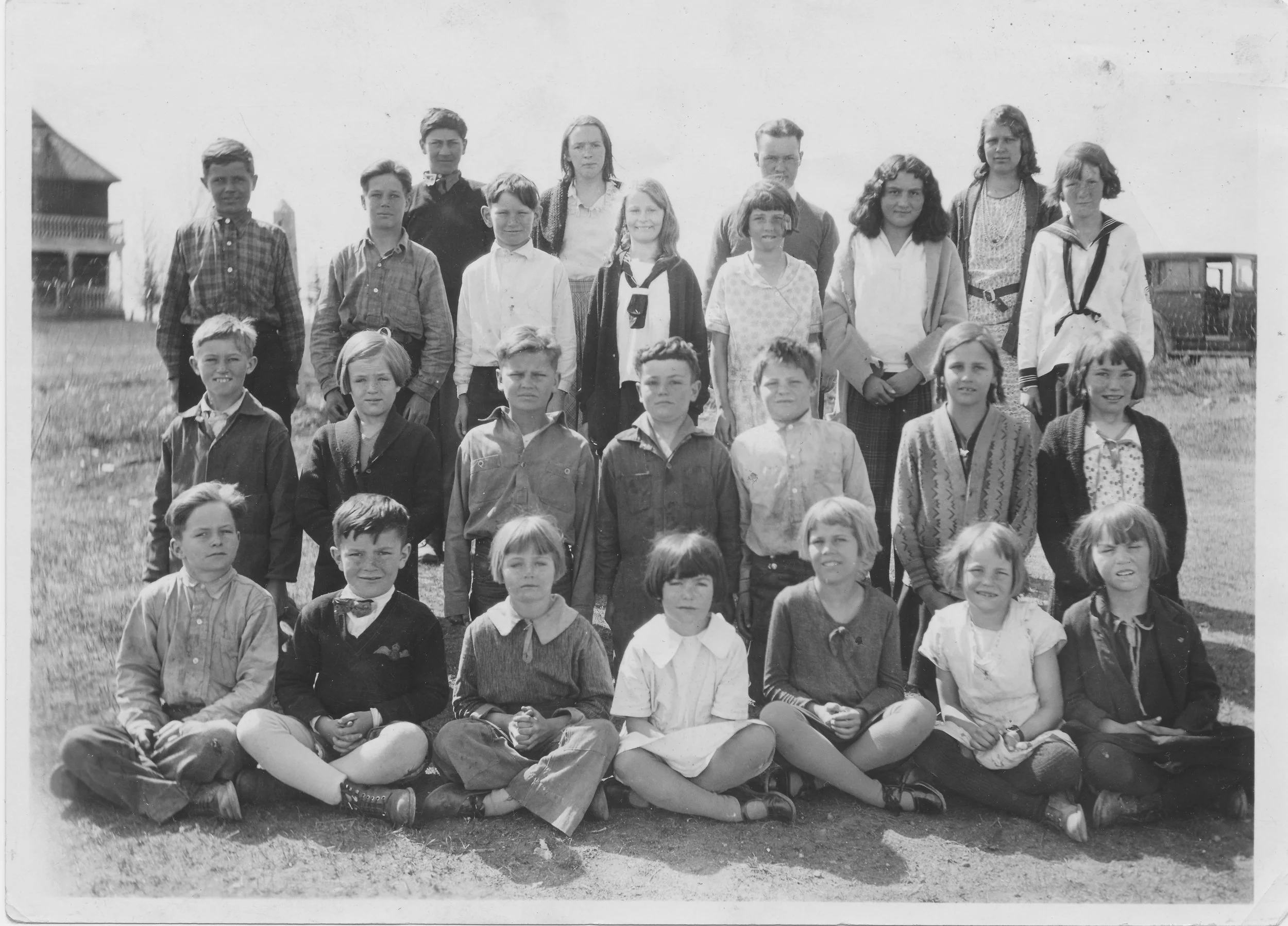
Class photo at Maple Leaf School, Aldersyde, c. 1930. Museum of the Highwood Collection
In the early 20th century one-room schoolhouses began popping up all over the prairies. Some of these schools included: Elite School, Peel Coulee School, Meadowbank School, Springdale School, and Maple Leaf School (among many many others!).
Many of these country schools were used up until the standardization of Alberta schools in the 1950’s. Metal signs now mark the spot where many of these schools once stood.
Written by Delainey Niven
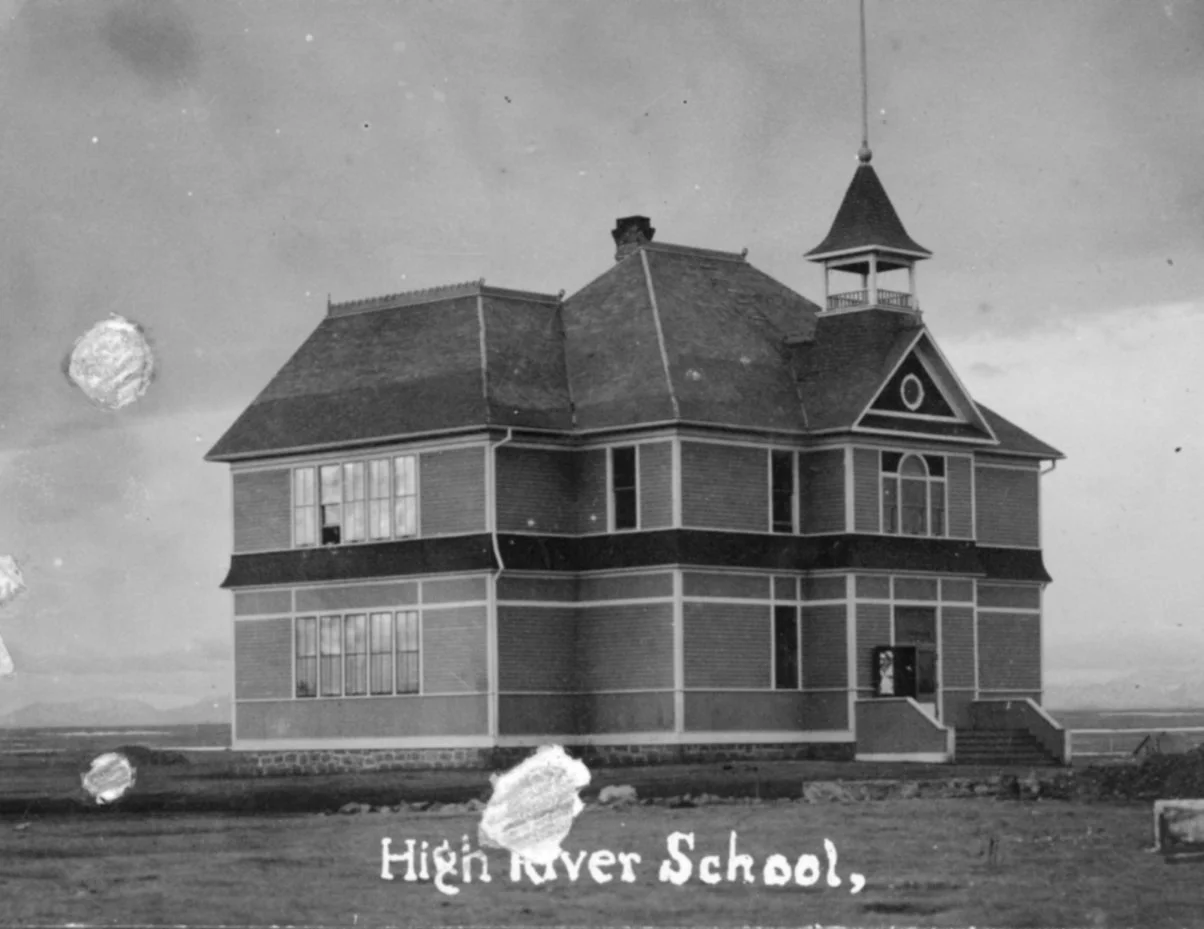
Eastward School, c. 1905. Museum of the Highwood Collection
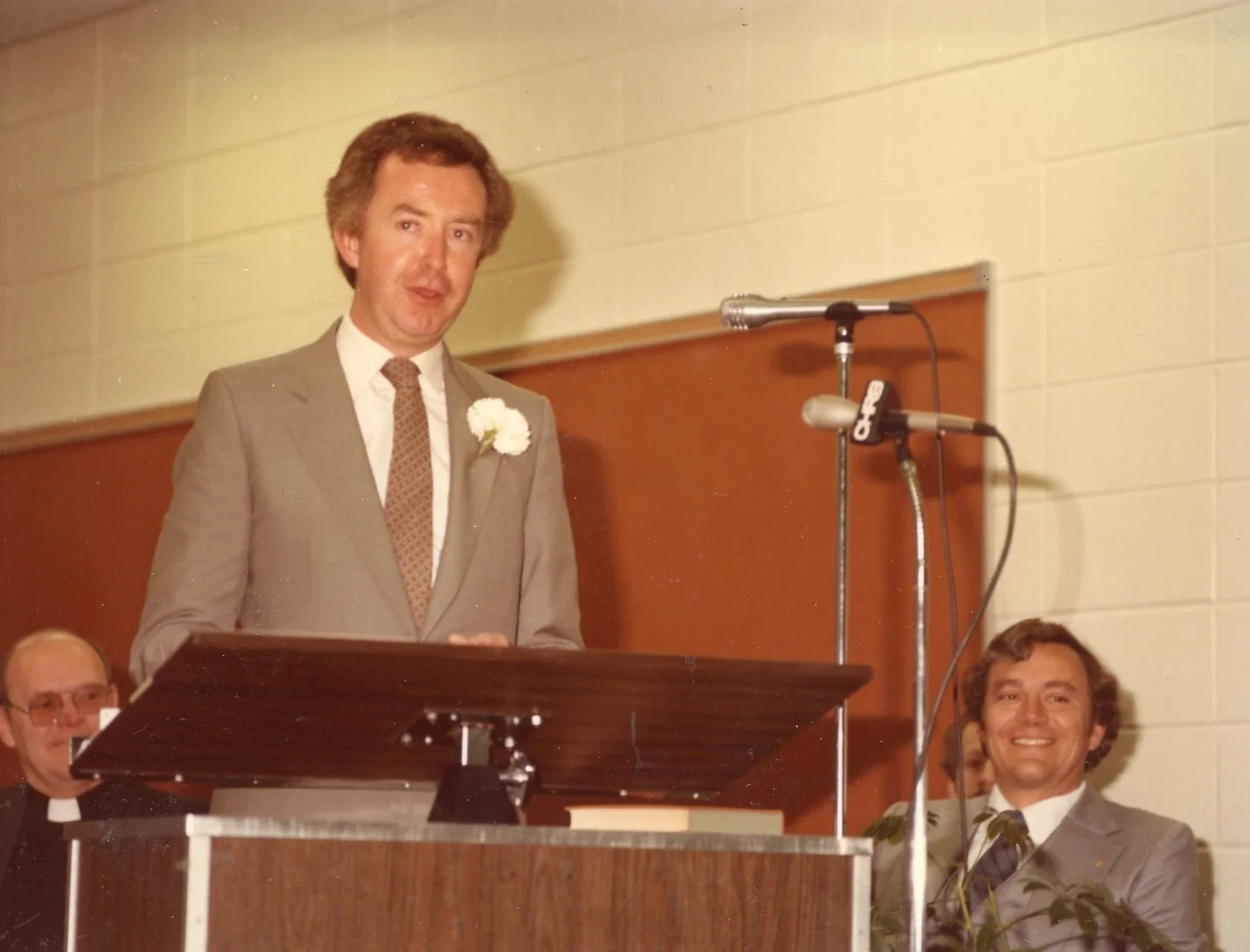
Principal Don Tannas cracks up as former Prime Minister, Joe Clark, speaks at the opening of the Right Honourable Joe Clark School, c. 1982. Museum of the Highwood Collection